
Is Clinging to C Holding Back Embedded?
An In-depth Look at the Impact of Sticking to Traditional Programming in Embedded Systems
The realm of embedded systems is a fascinating one, filled with intricate devices that power everything from our home appliances to advanced medical instruments and space technology. However, as the technology landscape continually evolves, it’s interesting to realize that the one true and tried technology that doesn’t change, but that we all use is C.
After 50 years of growth in the electronics industry, C has found a way to remain the go-to language for over 60% of embedded projects. It powers billions, if not trillions, of devices worldwide. Despite this popularity and dominance, it leaves the question to be asked, “Is Clinging to C Holding Back Embedded?”.
The Legacy of C in Embedded Systems
Since its creation in 1972 by Dennis Ritchie, C has become an enduring cornerstone of embedded systems programming. Designed to replace assembly language, C offers unparalleled low-level access to memory and hardware while maintaining a simplicity that allows developers to write efficient, portable code. Its unique ability to interact directly with system resources has made it indispensable in building firmware, real-time operating systems, and hardware drivers.
What truly solidifies C’s dominance in embedded systems is its vast ecosystem of legacy and open-source codebases. Decades of development have produced countless libraries, frameworks, and tools that are readily available for use and adaptation. This wealth of pre-existing code has allowed developers to accelerate development cycles and maintain compatibility with older systems, reducing time-to-market and development costs
Moreover, the software development ecosystem has evolved around C, with a wide array of analysis tools and processes tailored to the language. Static analyzers, compilers, and debuggers provide developers with sophisticated ways to ensure code quality, security, and performance. These tools, combined with C’s widespread use, create a feedback loop that continues to maintain its foothold in the embedded domain.
The Challenges of Sticking to C
Despite its venerable status, clinging to C exclusively in the modern era has drawbacks. As the complexity and demands of embedded systems increase, the limitations of C are becoming more pronounced. Here are some of the key challenges:
1. Safety and Security Concerns
C’s flexibility comes at a cost. The language lacks the inherent safety features that newer languages provide. Issues such as buffer overflows, pointer errors, and memory leaks are common pitfalls in C programming. These vulnerabilities can lead to critical security breaches, especially in systems where reliability and security are paramount. Just stop for a moment and think about how many systems are being connected to the internet these days. If you aren’t an expert in C and it’s various techniques, you’ll likely find yourself in a world of trouble!
2. Lack of Modern Features
While C has proven its worth over decades of use in embedded systems, it lacks many features found in modern programming languages that improve productivity, maintainability, and safety. These features are essential in addressing the increasing complexity of today’s software development. Some key capabilities missing from C include:
- Object-Oriented Programming (OOP): Modern languages like C++ and Rust allow developers to encapsulate data and behavior into objects, promoting reusability, modularity, and abstraction. (Although I would argue that there are techniques that can get you some OOP features).
- Automatic Memory Management: Features like Rust’s ownership model help prevent common errors such as memory leaks and dangling pointers, reducing debugging efforts.
- Robust Error Handling: C relies on return codes and manual error checking, whereas modern languages often provide exceptions or advanced error-handling mechanisms, enabling more readable and maintainable code.
- Type Safety: Languages like Rust enforce strict type systems that prevent many bugs at compile time, such as null pointer dereferencing and type mismatches.
- Standardized Testing Frameworks: C lacks a built-in testing framework, requiring developers to rely on third-party solutions or manual testing, increasing development time and complexity.
- Immutable Data Structures: Functional programming elements like immutability are not inherently supported in C, making it more challenging to write thread-safe and predictable code.
- Integrated Package Management: C lacks a unified ecosystem for managing libraries and dependencies, unlike languages with package managers such as Cargo for Rust or npm for JavaScript.
- Compile-Time Error Detection: Advanced compile-time checks in languages like Ada and Rust prevent entire classes of runtime bugs, offering greater reliability.
These limitations often make development in C more error-prone and labor-intensive, raising the question of whether its benefits outweigh the disadvantages in today’s fast-paced development environments.
3. You Need to Learn it on the Job
For many engineers, learning C is less about formal education and more about necessity. Despite its importance in embedded systems, C often gets overshadowed in academia by modern languages like Python, Java, C++, and more recently Rust. This leaves a critical gap in practical knowledge that engineers are forced to fill once they enter the workforce.
In the fast-paced environment of embedded systems development, on-the-job learning can be a double-edged sword. On the one hand, real-world projects offer invaluable hands-on experience. On the other hand, learning C under the pressures of deadlines and project deliverables can lead to rushed decisions, poor coding practices, and an incomplete understanding of the language’s nuances.
One major challenge lies in C’s steep learning curve. Its manual memory management, lack of guardrails like type safety, and reliance on low-level programming require a deep understanding of the hardware and a disciplined approach to coding. Let’s be honest: most software developers today lack discipline. It’s Wild West programming across the industry no matter how much we’d like to pretend it’s not. Without proper guidance, developers may struggle with debugging cryptic errors, managing system resources, and maintaining code quality.
Moreover, many organizations lack structured training programs for C, leaving junior engineers to learn through trial and error. This slows down individual productivity and can impact the team’s overall output and product quality.
In a world where development cycles are getting shorter, and systems are becoming more complex, relying on learning C “on the fly” is increasingly impractical. To address this gap, developers and organizations need access to better training resources, mentorship, and tools to build a solid foundation in the language.

The Embedded Software Academy provides you with better training resources, mentorship, and tools to help you succeed at delivering embedded systems. Whether you’re just starting out, or are a professional looking to modernize and maintain your skills, you’ll find expert resources to help you deliver on-time and accelerate your career.
Emergence of Modern Alternatives
The limitations of C have paved the way for modern programming languages to address these challenges while maintaining performance efficiency, even though no language alternative can currently match C. Given the rapid advances in microcontroller technology, efficiency today is less important than it once was. This opens the opportunity for other languages to begin taking center stage. Some of the notable alternatives include:
1. C++
C++ builds upon the foundation of C, adding object-oriented features, stronger type-checking, and more robust standard libraries. These standard libraries even include libraries targeting embedded like the embedded template library (ETL). This makes it a powerful tool for complex embedded applications, enabling developers to write more modular and maintainable code.
2. Rust
Rust is a modern systems programming language designed with safety and concurrency in mind. Its ownership model prevents common programming errors, such as null pointer dereferencing and data races. Rust’s performance is comparable to C, making it a compelling choice for resource-constrained environments. The biggest issue holding it back is that its learning curve is quite extensive, and there currently aren’t many embedded developers who know the language.
3. Python
While Python is not typically used for low-level embedded programming, it has found its place in embedded systems through frameworks like MicroPython and CircuitPython. These frameworks allow developers to write high-level applications and scripts in an easy-to-read language, speeding up development and prototyping. While you might think these languages don’t have a place among professional embedded systems developers, you can find several products and tools that have leveraged Python to create unique value in the industry. I wouldn’t immediately dismiss them, even though I don’t think they’ll become mainstream.
Balancing Tradition and Innovation
The embedded systems industry faces a delicate balancing act. On one hand, C’s proven reliability and widespread adoption can’t be easily dismissed. On the other hand, the benefits of modern languages offer compelling reasons to diversify the programming landscape.
Organizations are increasingly recognizing the need to strike this balance. Many are adopting a hybrid approach, leveraging C for performance-critical components while using C++ or Rust for higher-level functionalities. This allows them to harness the strengths of both traditional and modern paradigms.
The Road Ahead
As we move forward, the evolution of embedded systems programming will likely involve a gradual shift towards modern languages. Education and training will play a crucial role in this transition, equipping new generations of developers with the skills needed to navigate both C and its successors.
Additionally, developing more sophisticated tools and frameworks will aid in bridging the gap between old and new paradigms. Static analysis tools, integrated development environments (IDEs), and debugging tools tailored for modern languages can ease the transition and improve code quality.
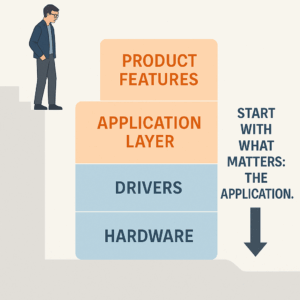
The future of the embedded programming landscape will likely not be a single dominant language, but C used at the lowest levels and then C++ or Rust being used for the application layer. This hybrid approach allows the best of both worlds to be used. Maintaining speed through C while gaining the security and scalability of modern programming practices.
Conclusion
While clinging to C may offer a sense of security and familiarity, it is essential to recognize the limitations this mindset imposes. Embracing modern programming languages can unlock new levels of safety, productivity, and innovation in embedded systems. The journey forward will require a thoughtful integration of traditional expertise with contemporary advancements, ensuring that the embedded systems industry remains at the forefront of technological progress.
Is clinging to C holding embedded back? I don’t think so. With the right tools and methodologies, C can be just as safe and effective as any modern language. However, given the lack of formal training in C, the safest way forward might just be a multilanguage solution. Teams can use C and their legacy code where real-time performance is critical and where software meets the hardware. For application code and features, a more modern language fits project needs much more effectively.
Struggling to keep your development skills up to date or facing outdated processes that slow down your team, raise costs, and impact product quality?
Here are 4 ways I can help you:
- Embedded Software Academy: Enhance your skills, streamline your processes, and elevate your architecture. Join my academy for on-demand, hands-on workshops and cutting-edge development resources designed to transform your career and keep you ahead of the curve.
- Consulting Services: Get personalized, expert guidance to streamline your development processes, boost efficiency, and achieve your project goals faster. Partner with us to unlock your team's full potential and drive innovation, ensuring your projects success.
- Team Training and Development: Empower your team with the latest best practices in embedded software. Our expert-led training sessions will equip your team with the skills and knowledge to excel, innovate, and drive your projects to success.
- Customized Design Solutions: Get design and development assistance to enhance efficiency, ensure robust testing, and streamline your development pipeline, driving your projects success.
Take action today to upgrade your skills, optimize your team, and achieve success.